Best Charity CRM Software for 2026

Compare the best charity CRM software. Discover which platforms deliver the best donor management, website integration, and value for money in 2026.

By

Aqsa Deen

8

mins read

N3O Philosophy

What is a Nonprofit CRM?

A nonprofit CRM (Constituent Relationship Management) system is a central platform that helps charities and nonprofits manage relationships with their donors, volunteers, and beneficiaries. Unlike generic business CRMs, it’s designed specifically for fundraising, donation management, and supporter engagement.

The main goal of charity-specific CRM is to unify data from multiple touchpoints (such as donation forms, crowdfunding platforms, and events) into one place. This helps them to personalise communications, measure impact, and strengthen donor retention while maintaining compliance and transparency.

Why Charities Need a CRM?

A well-designed charity CRM is mission-critical infrastructure for any modern nonprofit. A Charity Digital survey asked charities about their level of satisfaction with their IT provision. More than half (54%) responded that they face significant CRM challenges.

A survey done by N3O with a large number of NGO’s identified the following pain points commonly faced by charities regarding their technical infrastructure.
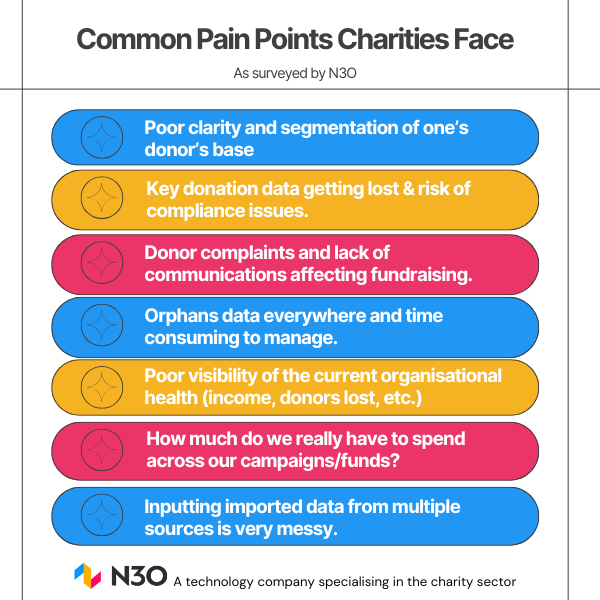
A Charity CRM (Constituent Relationship Management) system solves these by serving as the central hub for every donor interaction, campaign, and financial transaction. 

Managing a charity today means managing relationships, not just donations. As fundraising channels multiply and supporter expectations grow, relying on spreadsheets or disconnected systems can quickly lead to data silos, missed opportunities, and inefficient communication.

What to Look for When Choosing Charity CRM Software?

Selecting the right charity CRM is more than about features; it’s equally important to choose a system that aligns with your charity’s size, workflows, digital maturity, and future ambitions.

Below is a snapshot of what a CRM evaluation criteria should look like for charities:

Next, we explore the top CRMs for nonprofits delivering across different charity personas.

Top CRMs for Nonprofits:

1. Engage CRM

What do they say about themselves?

Engage CRM by N3O identifies itself as the complete charity CRM with everything a charity needs in one place. 

A purpose-built charity CRM that centralises donations, sponsorships, communications, and analytics into one streamlined platform, designed exclusively for nonprofits. 

Pros:

  • Purpose-built for charities: Includes donations, sponsorships, Gift Aid, communications, and finance tracking by design.
  • All-in-one ecosystem: Combines fundraising, website, sponsorships, and feedback management in one platform.
  • Affordable & scalable: Modular pricing based on charity income with flexible onboarding options.
  • Easy to use: Powerful yet intuitive; teams can manage independently, with built-in automation and workflows, post initial onboarding support.
  • Sector expertise: Developed by charity professionals with 20+ years’ experience.
  • Bespoke Websites: N3O builds custom charity websites that integrate directly with Engage CRM, creating a seamless end-to-end ecosystem with real-time data flow.
  • Secure & compliant: GDPR-ready hosting, encrypted databases, and strong access controls.
  • Modern architecture: Cloud-native, modular, and integration-friendly.
  • Dedicated support: Hands-on onboarding, workshops, and a responsive help centre.
  • Continuous improvement: Regular feature updates and transparent product roadmap.

Cons:

  • Learning curve: Transitioning from legacy systems requires team training and data migration.
  • Limited DIY customisation: Unlike open-ended CRMs, Engage doesn’t allow third-party developers to build freely within the system. Custom work is managed directly through the Engage team to ensure full support and roadmap alignment.
  • Evolving integration ecosystem: While Engage covers all core charity functions, its marketplace of external apps is still growing. Charities needing deep integrations with niche tools may need to wait as new modules and connectors are rolled out.

Pricing:

There are 3 plans catering to different organisational needs. Prices are income-based to ensure a fairer approach, aligning with each charity's size and usage.

  • Essential Plan: Starting from £99 GBP p/m
  • Growth Plan: Starting from £142 GBP p/m
  • Comprehensive Plan: Starting from £199 GBP p/m

They also have a marketplace of integrated tools that you can use to enhance your CRM capabilities.

Check Pricing here: https://www.n3o.ltd/pricing
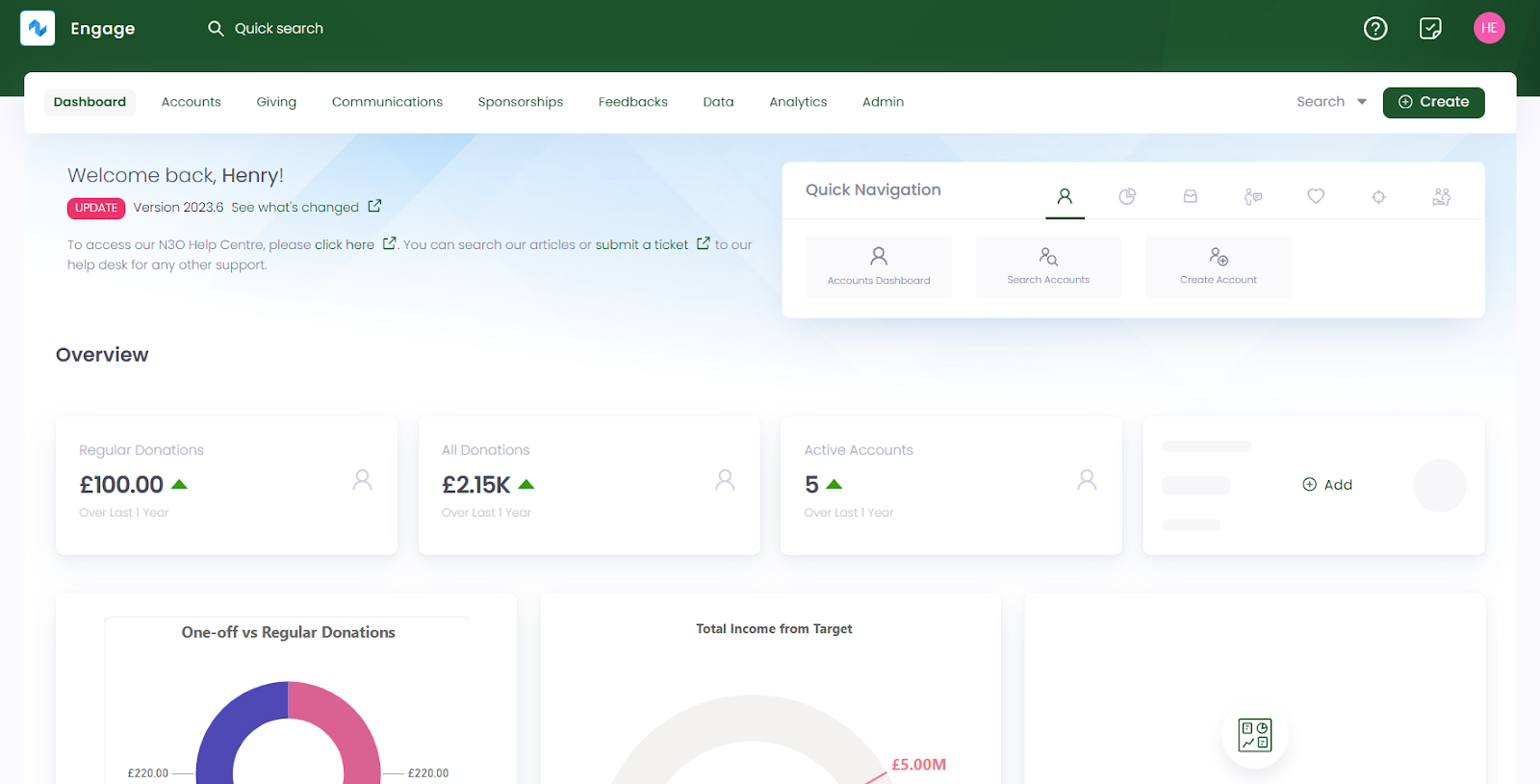
Screenshots:

Website: 

https://www.n3o.ltd/

Best for: 

Medium to large-sized charities

Use Cases: 

  • Charities seeking a unified platform for fundraising, sponsorships, and donor management.
  • Organisations that want their donation pages, campaigns, and CRM fully integrated on one system.
  • Teams looking to automate receipting, Gift Aid, and reporting without external plugins or consultants.
  • Medium to large charities aiming to improve data accuracy, transparency, and long-term donor retention.

Engage CRM was built specifically for charities, meaning its workflows, fields, and automation are designed around real fundraising and sponsorship operations — not adapted from commercial systems. Its deep integration with donation pages, Gift Aid, and donor communications eliminates the need for plugins or third-party tools. This makes it ideal for charities seeking a unified platform that prioritises operational efficiency, compliance, and donor stewardship over technical customisation.

What users are saying about Engage CRM?

“Engage is user-friendly, self-explanatory, and easy to use. The move didn't affect our donors [at all].”

- Kishy Willoughby, Head of Operations- Mercy Relief 

"The support is amazing. Nine times out of ten, we get the answer we need within minutes. That kind of responsiveness is rare, and it’s one of the reasons we see N3O as a long-term partner.

The usability of the CRM is quite high - anyone in the organisation can use it without needing training. I always compare it to booking a ticket online: you just fill in the details, process the donation, and it's done. It's that user-friendly.

We’ve grown over the past few years, and Engage has helped us retain donors because it makes us look professional. People see us replying on time, securing data, and automating receipts. It shows them that we know what we’re doing."

- Youssef Farhat, Business Development Director, GRF

2. Salesforce Nonprofit Cloud

What do they say about themselves?

Salesforce markets its Nonprofit Cloud as a unified platform that helps charities “build relationships, raise more resources, and deliver measurable impact.” It positions itself as a mission-driven extension of the world’s #1 CRM, bringing together fundraising, programs, volunteers, and outcomes into one connected system to accelerate social impact.

Pros:

  • Highly Customisable: Extremely flexible platform that can be configured to fit complex or unique charity workflows.
  • Massive Integration Ecosystem: Connects with thousands of apps via the Salesforce AppExchange and APIs.
  • Enterprise-Grade Infrastructure: Reliable, secure, and scalable for large organisations handling global operations.
  • Power of Us Programme: Offers 10 donated licences and deep discounts for nonprofits, making enterprise tools more accessible.
  • Global Support Network: Backed by the Trailblazer Community, offering peer collaboration and learning resources.

Cons:

  • Not Charity-First: Built originally for sales teams. Fundraising and Gift Aid processes often require heavy adaptation.
  • Complex Setup: Implementation usually demands paid consultants and significant internal time.
  • High Long-Term Costs: Customisation, licences, and ongoing consultancy can lead to budget overruns.
  • Steep Learning Curve: Interface and workflows can overwhelm small teams or non-technical users.
  • Maintenance Heavy: Requires continuous updates, data management, and admin involvement to stay effective

Pricing:

Multiple editions of the Nonprofit Cloud are available to choose from, starting at £48 per user per month (though charities get 10 free licenses). On top of the actual license, there is a layer of support called ‘Success Plan’ that comes with different levels of support and expert guidance for your organization from the Salesforce team at an additional cost.

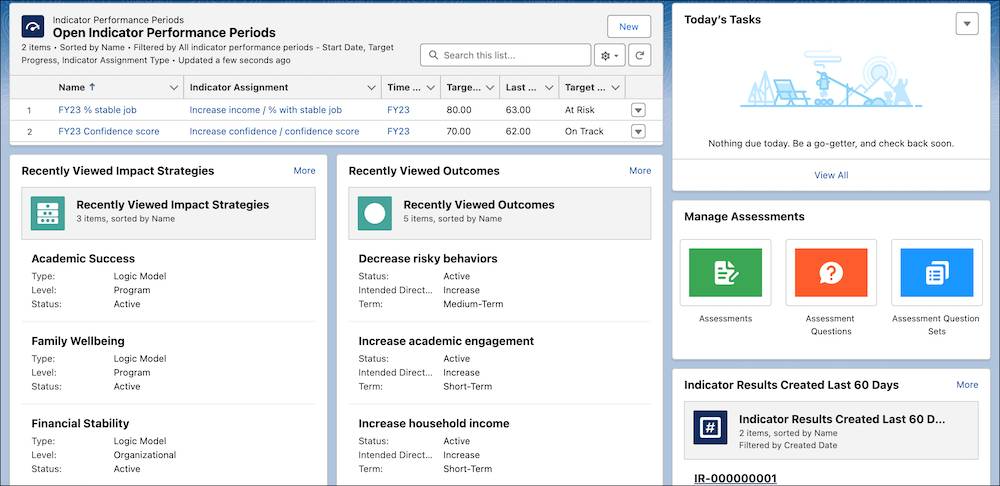
Screenshots:

Website:

https://www.salesforce.com/nonprofit/cloud/

Best for: 

Mid to large-sized and enterprise-level charities.

Use Cases: 

  • Charities with complex, multi-program structures that need deep data segmentation.
  • Global NGOs requiring extensive integrations and multi-department reporting.
  • Organisations with dedicated IT or Salesforce administrators managing CRM infrastructure.

Salesforce’s power lies in its flexibility and scalability, making it a natural fit for large, multi-department organisations that need extensive reporting and integrations. However, because it was not originally designed for charities, it works best where internal IT teams or consultants can customise it to fit nonprofit workflows. Global NGOs and enterprise-level charities benefit most from its segmentation and complex data modelling capabilities.

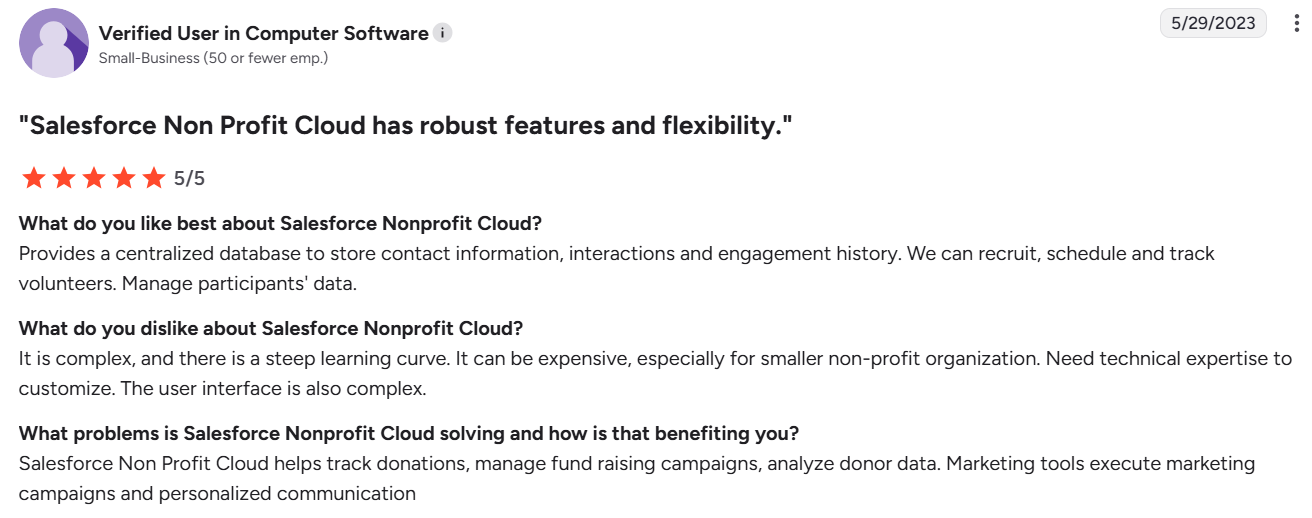
What users are saying about Salesforce Nonprofit Cloud?

“Salesforce Nonprofit Cloud enables strong cross-department collaboration, letting teams in development, programs, and research work from a unified database. Users appreciate its flexible reporting and wide range of standard integrations through NPSP. 

However, the reviewer notes that costs escalate quickly as organisations grow, and support quality is inconsistent, with long response times and overly technical assistance. They also mention missing core nonprofit features (like donor queues and retention metrics). 

Overall, Salesforce improves integration with other systems used for fundraising, event registrations, and more.”

Review Link: https://www.g2.com/products/salesforce-nonprofit-cloud/reviews/salesforce-nonprofit-cloud-review-7804657

3. Blackbuad

What do they say about themselves?

According to Blackbaud, Raiser’s Edge NXT is the non-profit CRM software built for fundraisers.”

They highlight benefits such as:

  • A single system to manage all supporter relationships. 
  • AI-driven insights and analytics (eg, “44% average increase in total dollars raised” claim) 
  • Cloud-based, accessible “anywhere” and designed to evolve with nonprofits. 
  • A commitment to ongoing innovation and enhancements in the nonprofit tech space.

Pros:

  • Strong donor management and fundraising features: many users highlight its ability to capture detailed constituent data and run complex reports.
  • AI and analytics capabilities: built-in analytics and predictive features allow nonprofits to glean insights from donor behaviour and giving data. 
  • Cloud-based accessibility: being web/mobile friendly means users can access the platform across devices.
  • Integrated fundraising tools, including online donation forms, gift entry workflows, and dashboard visualisations. 

Cons:

  • High cost / value-for-money concerns: Many reviewers say the platform is expensive and has hidden or escalating costs for modules and users. 
  • Features still maturing: Users have highlighted that some features (eg, web-view vs database view, pledges, queries) are less intuitive or still evolving.
  • Steep learning curve & usability challenges: Some users report that the system is complex to navigate, especially for smaller teams or less technical users. 
  • Support & service issues: Complaints about slow or inconsistent customer support and difficulty in executing some tasks smoothly.

Pricing:

Blackbaud offers personalised quotes to each organisation. Other sources on the internet say the pricing for The Raiser’s Edge NXT starts at $5,600 per year.

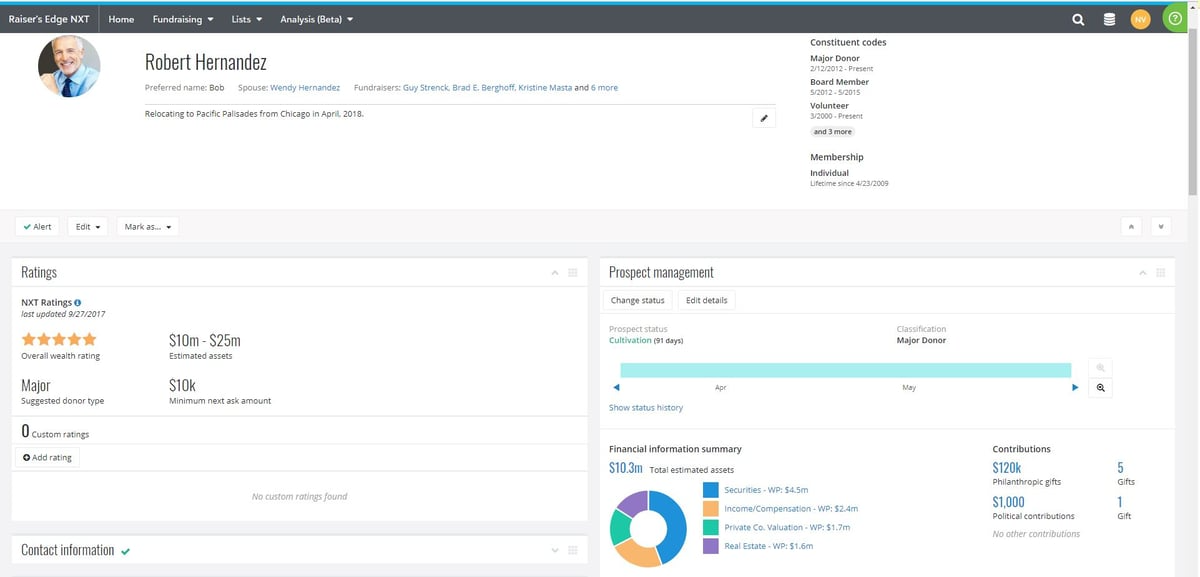
Screenshots:

Website:

https://www.blackbaud.com/products/blackbaud-raisers-edge-nxt

Best for: 

Large or established nonprofits with complex portfolios and operations that have in-house technical/IT resources or consultancy support.

Use Cases: 

  • Managing major gift pipelines for a large foundation or international NGO, tracking supporter history, pledges, and long-term relationships.
  • Running detailed fundraising campaigns with advanced segmentation, dashboards, and analytics to optimise giving.
  • Organisations requiring in-depth reporting and integration across finance, donor data, online giving, events, and campaigns.

Blackbaud has decades of experience in nonprofit technology and offers a platform purpose-built for professional fundraising operations. Its strength lies in managing major donor relationships, campaigns, and analytics at scale. Large organisations and foundations find value in its depth of reporting, donor history tracking, and integration with financial systems. However, the cost and complexity make it less suited to smaller charities.

What users are saying about Blackbuad CRM?

“Blackbaud Raiser’s Edge NXT is easy to use with strong analytics and visual dashboards that make tracking fundraising performance straightforward. However, it’s expensive, often pricing out smaller nonprofits, and that customer support and third-party integrations can be difficult and costly. Overall, it’s seen as a comprehensive donor CRM that enables team-wide access to donor data and fundraising insights, but best suited for larger organisations with bigger budgets.“

Review Link: https://www.g2.com/products/blackbaud-raiser-s-edge-nxt/reviews/blackbaud-raiser-s-edge-nxt-review-10843797

3. Hubspot

What do they say about themselves?

HubSpot positions itself as “The All-in-One Digital Platform for Nonprofits”. They highlight that eligible nonprofits can enjoy discounts on their tools, benefit from nonprofit-friendly onboarding, and access an ecosystem of 1,000+ integrations.

They promote the platform as a unified system to manage fundraising, marketing, communications, and donor/volunteer relationships in one place. 

Pros:

  • Generous free tier and nonprofit discounts: provides access to core CRM + contact database with minimal cost. 
  • Unified donor/constituent view: tracks interactions, website visits, event participation, and gift history in one timeline. 
  • Strong marketing & automation features: workflow builders, email automation, segmentation, and volunteer/donor outreach are built in. 
  • Scalable and widely integrated: large app marketplace, many out‐of‐the‐box connectors, and known brand support. 

Cons:

  • Not designed specifically for fundraising: lacks some built-in core nonprofit functionalities (e.g., advanced moves-management, deep donation gift workflows) without customisation. 
  • Pricing escalates: while the free/entry tier is strong, moving to advanced tiers or unlocking full automation/reporting can become expensive. 

For example: A charity may start on HubSpot’s free plan at £0/month, but once they need automation, gift stewardship workflows, or custom reporting, they must upgrade to Marketing Hub Pro (~£420/month after the nonprofit discount). If they also require deeper CRM functionality across teams, a CRM Suite Pro bundle can rise to £800-£1,000/month, and advanced onboarding (£3,000-£6,000 unless waived) adds further cost, making the jump from free to fully functional significantly more expensive.

  • Some limitations in lower tiers: free/entry plans have restricted custom fields, workflow depth, and reporting capabilities. 

Pricing:

HubSpot offers pricing models for nonprofits, with a 40% TechSoup-verified discount applied across all Hubs and CRM Suites. After the discount, typical examples include:

  • Marketing Hub Pro (~$534/month)
  • Sales Hub Pro (~$54/month)
  • Service Hub Pro (~$54/month) and
  • CMS Hub Pro (~$240/month).

Many charities start with the free CRM, offering 1M contacts, basic email, forms, and dashboards before upgrading once they need automation, segmentation, or deeper reporting. HubSpot also requires onboarding for Pro/Enterprise plans ($3,000–$6,000), though nonprofits often waive these fees by onboarding through a certified partner, especially when migrating from systems like Salesforce NPSP, Blackbaud, or Classy.

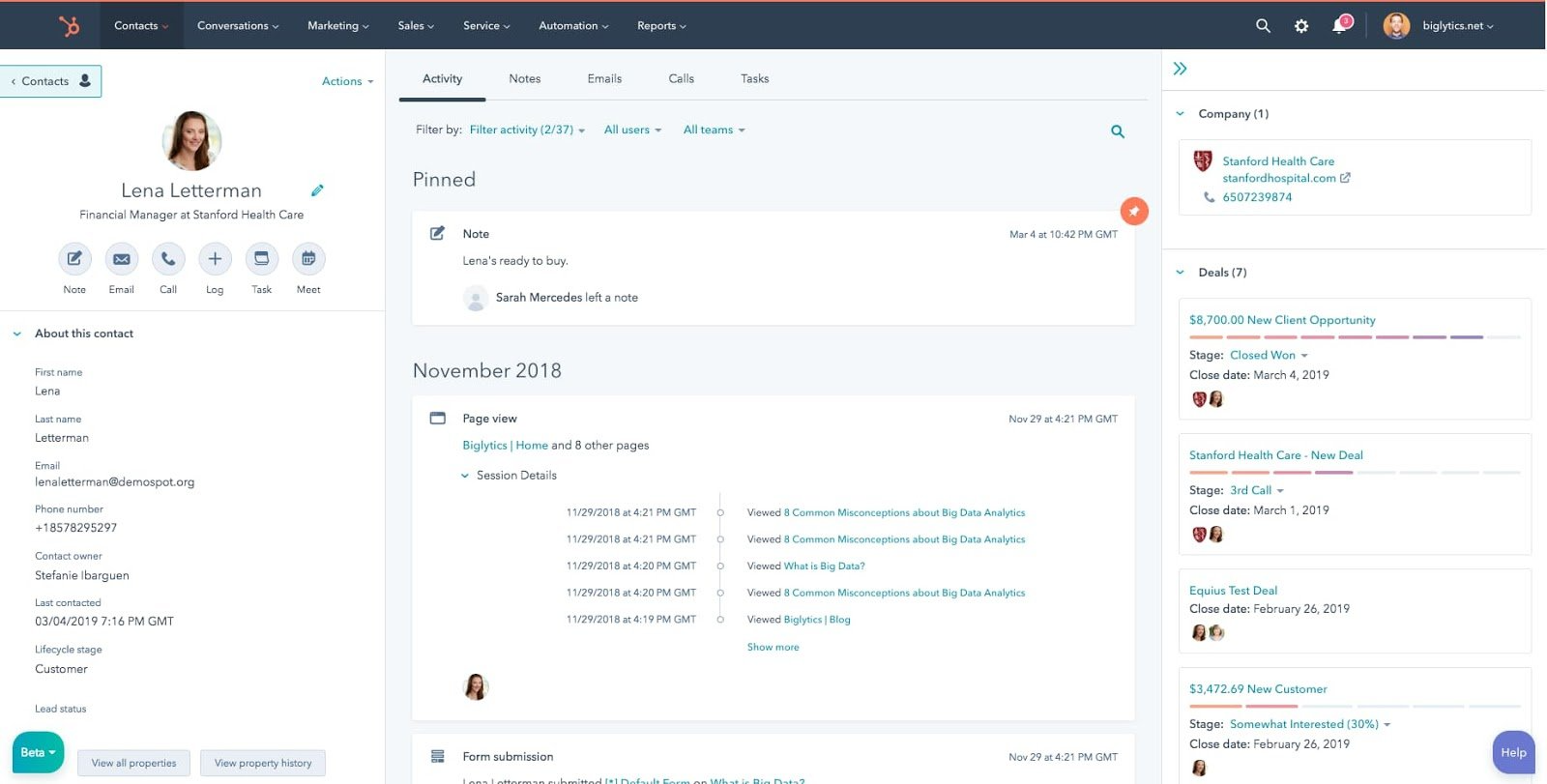
Screenshots:

Website:

https://www.hubspot.com/nonprofits

Best for: 

Small to mid-sized charities that want an all-in-one platform focused on donor & volunteer engagement, marketing, and communications, especially where fundraising is one of multiple functions rather than the sole focus.

Use Cases: 

  • Small to mid-sized charities looking to manage donor pipelines and communication in a visual, easy-to-use CRM.
  • Non-profits focused on inbound marketing, email automation, and lead nurturing for donor acquisition.
  • Organisations that prioritise storytelling, campaign tracking, and contact segmentation to grow engagement.
  • Charities running volunteer recruitment or event promotion through digital channels.

HubSpot’s strengths lie in contact management, communication automation, and campaign analytics, not in finance, Gift Aid, or compliance, so nonprofits typically use it for front-end donor engagement rather than full operations.

Its drag-and-drop pipelines and email tools are ideal for charities wanting a communication-driven CRM with automation without the cost or complexity of platforms like Salesforce.

What users are saying about HubSpot CRM?

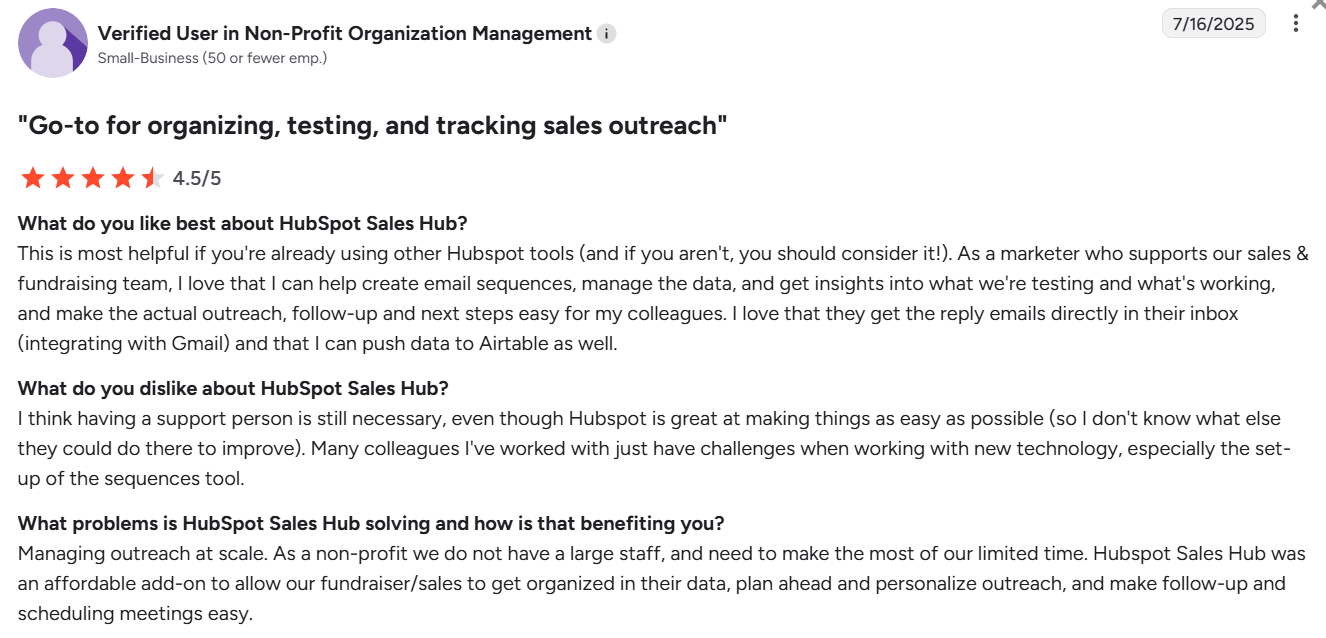
“Hubspot CRM’s clean, intuitive interface makes it easy to track leads, update contact details, and monitor interactions in real time through the visual deal board. They appreciate how it centralises lead activity and improves efficiency compared to their old system of scattered Google Docs.

However, they find that some of HubSpot’s terminology doesn’t fit nonprofit operations (e.g., “Evangelist”), forcing their team to adapt their internal language. They also mention missed chat notifications due to the lack of a clear audio or visual alert. Despite these drawbacks, the reviewer believes HubSpot offers a strong upgrade for nonprofits moving from smaller CRMs like Copper, helping them nurture leads more consistently and track growth opportunities effectively.“

Review Link: https://www.g2.com/products/hubspot-sales-hub/reviews/hubspot-sales-hub-review-4100212

4. Donorfy

What do they say about themselves?

Donorfy describes itself as a “complete charity CRM toolkit”, built for nonprofits and fundraisers to manage supporters, donations, campaigns, events, memberships, and relationships in one cloud-based system. Their website emphasises that the platform is “designed by fundraisers, for fundraisers” and focuses on helping charities stay organised, save time, and “focus on what matters most”.

They also highlight their integration ecosystem, ease of use, and scalability across small to medium charities.

Pros:

  • Strong ease-of-use and quick adoption: Several reviews cite Donorfy as intuitive and fast to pick up, even for smaller teams. 
  • Charity-focused out of the box: Because Donorfy is built specifically for nonprofit fundraising, it includes key features like donation/gift-aid workflows, campaign/event support, and integrations suited for charities. 
  • Transparent, scalable pricing based on the number of constituents (supporter records), which helps smaller charities budget more predictably. 
  • Good integration set: It connects with fundraising platforms, online forms, marketing tools, and accounting systems for a more unified workflow. 
  • Strong reporting and analytics support: The built-in reports and dashboards are designed for charities to move from spreadsheets to CRM-driven decisions. 

Cons:

  • Limited service-delivery / broader operations scope: While strong on fundraising, some sources note that Donorfy is less suited for organisations that need to manage service delivery, case-management, or complex operations beyond fundraising. 
  • Feature set is less customisable than enterprise systems: Because the focus is on core fundraising functionality for small-to-medium charities, there may be less flexibility for highly niche workflows or heavy customisation compared with large enterprise CRMs. 
  • Pricing grows with database size: Though transparent, as constituent counts rise, the subscription cost increases significantly, which can pose budgeting challenges for very large databases.

Pricing:

Donorfy uses a tiered pricing model based on the number of constituents/supporter records.

For example, their “Starter” plan supports up to ~5000 constituents under a low monthly fee.

The “Professional” and “Enterprise” tiers scale up toward 200,000 and 1 million constituents, respectively, with higher monthly fees.

The model emphasises “no hidden surprises,” and unlimited users are included in most tiers.

For instance, for up to 50,000 constituents with unlimited users, all out-of-the-box features, all standard integrations, unlimited web forms & triggers, accounts integration, and more, a charity with a small to medium-sized team would have to pay £605/mo +VAT.

Additionally:

  • Implementation Plans: There are paid onboarding packages that guide charities through setup, data migration, and configuration to ensure a smooth and effective Donorfy rollout.
  • Essentials (Free CRM): A no-cost starter plan offering core donor management tools suitable for small or early-stage charities with up to 250 constituents is also available.

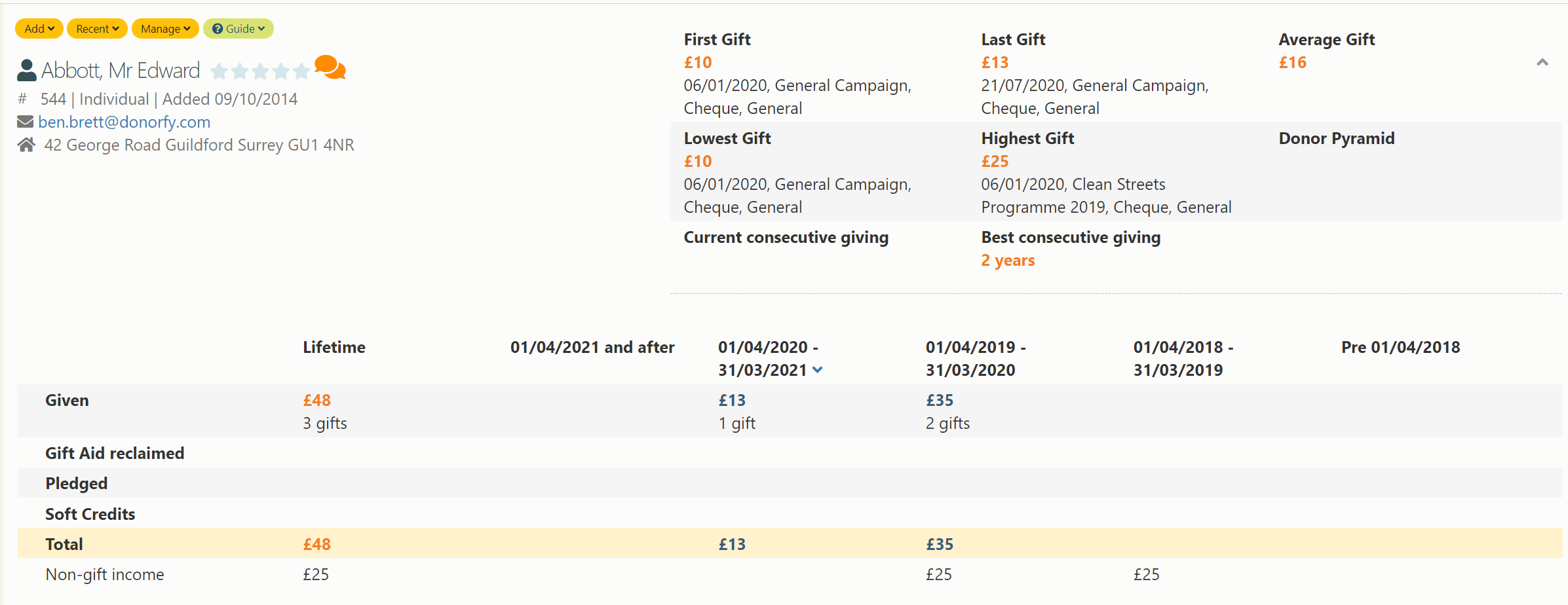
Screenshots:

Website: 

https://donorfy.com/

Best for: 

Smaller to medium-sized charities (UK/Europe context) who want a purpose-built fundraising CRM with strong core functionality, minimal customisation overhead, good value, and who may not have large IT resources or need wide-ranging enterprise-level features.

Use Cases: 

  • A charity moving from spreadsheets to a central donor database to gain better donor insight and reporting.
  • A fundraising team wanting to automate Gift Aid claims, track recurring donations, and manage events and campaigns in one system.
  • Organisations needing a pricing model that scales with constituent count and that want unlimited users without per-seat licensing complexity.
  • Teams needing strong integration with fundraising platforms, forms, marketing tools, and accounting systems to streamline workflows.

Donorfy was created specifically for charities transitioning from spreadsheets or basic databases, offering an accessible cloud CRM that balances functionality and affordability. Its built-in Gift Aid processing, campaign management, and automation make it practical for small to medium-sized charities. With strong integrations to platforms like JustGiving and Mailchimp, it provides a ready-made ecosystem without the need for heavy technical customisation.

What users are saying about Donorfy CRM?

"When we first got started, it was a breath of fresh air. It was like we came out of the 90s and into the 21st century. Traditional CRMs are very complex and the screen is very busy and full. with lots of info you never need or use. The simplification of Donorffy was a relief to everyone." 

- Stuart Mann, Supporter Relations at Care Charity

"We are really pleased with Donorfy. It's great for helping us to manage our relationships and communications with supporters. The Donorfy team are all incredibly friendly and helpful too."

- Rachel Hogg from The Benjamin Foundation

Review Link: https://donorfy.com/customers#testimonials

6. Beacon CRM

What do they say about themselves?

Beacon positions itself as a “super-simple, flexible CRM built for charities”. Their website states they want to help charities “run like clockwork” with easier data entry, fewer spreadsheets, and effective support. They emphasise:
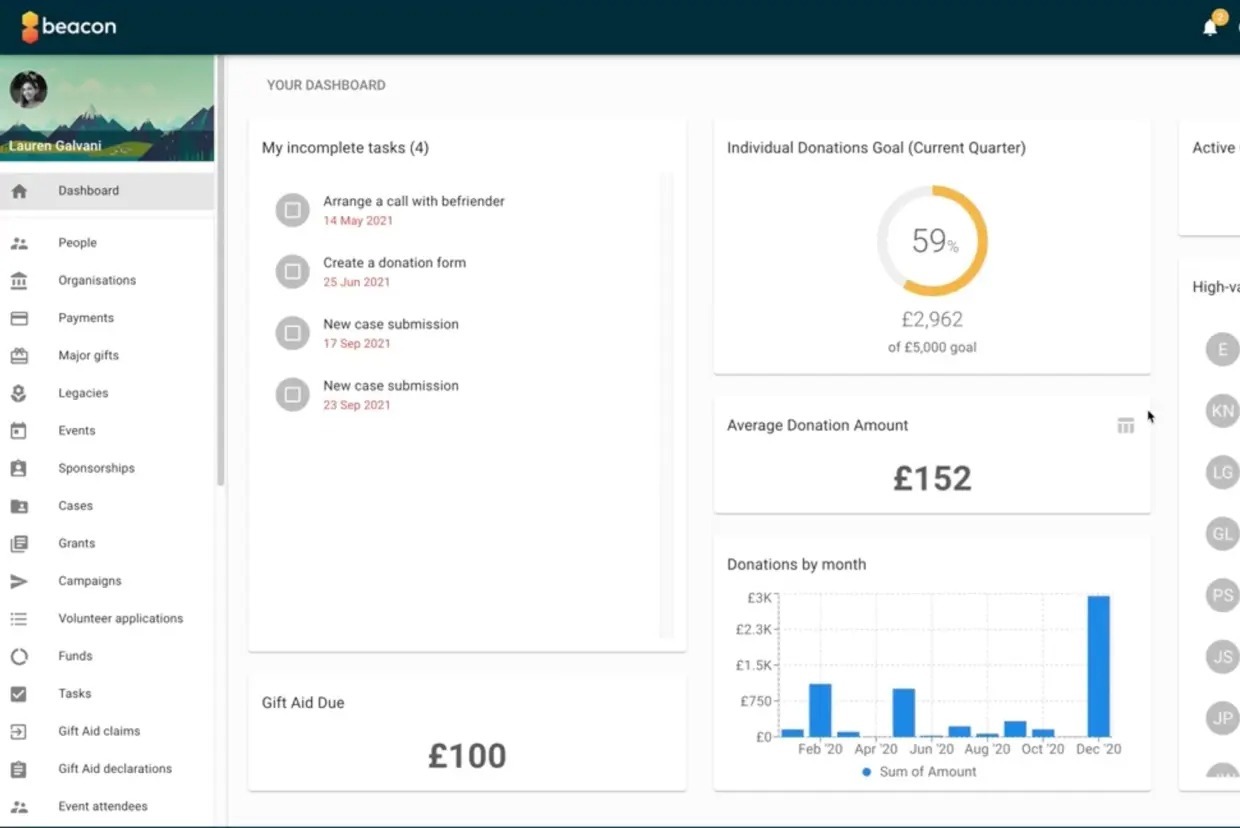
  • It’s built for charities (not just adapted from business CRM) with features for fundraising, volunteer management, events, case management, etc. 
  • Ease of use and good support (“98% of support interactions scored 4/5 or 5/5”, average first response under 5 minutes). 
  • A pricing model geared to charity contacts, flexible modules, and zero “platform fees” on payments via their forms.

Pros:

  • Very user-friendly and intuitive UI: Users report that even teams with less IT experience found Beacon easy to learn and use. 
  • Charity-specific functionality: Fundraising, membership, volunteering, event ticketing, portals, and custom records are built in or easily added. 
  • Strong support & service: UK-based support, fast response times, and customer testimonials about excellent service. 
  • Flexible pricing and modular features: Pricing based on the number of contacts + modules; zero extra platform fees on payment forms. 
  • Customisability without heavy tech burden: Users say it allows custom fields, workflows, and data objects without always requiring specialist dev. 

Cons:

  • Best for basic fundraising & CRM needs: Works well for simple donor management, but medium–large charities may struggle with complex requirements like multi-source data imports, extensive sponsorship programmes, or using diverse payment gateways beyond Stripe/GoCardless.
  • Some features are still maturing: A few integrations or niche features (e.g., auto-address fill, certain third-party platforms) are mentioned as lacking or under development. 
  • May require scoped support for advanced workflows: While customisable, charities with deep or unusual operational processes may need additional help or wait for more advanced functionality.
  • Pricing increases with contacts and modules: While transparent, charities note that as their contact database grows or they add modules, the cost rises significantly. 

Pricing:

  • Starter plan: £32.50/month (annual billing) for ~500-2,000 contacts, 3 users, unlimited read-only users.
  • Standard plan: ~ £111/month (annual billing) for ~2,500-50,000 contacts, ~10 users. 
  • Premium plan: ~ £284/month (annual billing) for up to ~10,000-100,000 contacts, 100 users, unlimited read-only users, unlimited custom fields.
  • They also publicise 0% platform fees on payment forms (i.e., Beacon doesn’t charge extra for donation/ticketing forms beyond the payment provider). 

Screenshots:

Website:

https://www.beaconcrm.org/

Best for: 

Small to mid-sized charities (and even larger ones scaling) that:
  • Want a charity-specific CRM with built-in fundraising, membership, volunteering, and event ticketing.
  • Prefer ease of use, strong support, and modular growth rather than heavy custom development.
  • Value predictable costs based on contacts + modules rather than unpredictable consultancy or heavy customisation.

Use Cases: 

  • A charity wanting to consolidate donor, volunteer, and event data into one system, replacing spreadsheets and disparate tools.
  • Organisations needing customisable data objects (e.g., managing beneficiaries, assets like memorial benches, membership tiers) and workflows without major tech investment.
  • Teams looking to run automated workflows (thank-you emails, Gift Aid, event ticketing forms) and reduce admin time.
  • Charities that expect the database to grow and want a platform that can scale (in contacts/user size) with them.

What users are saying about Beacon CRM?

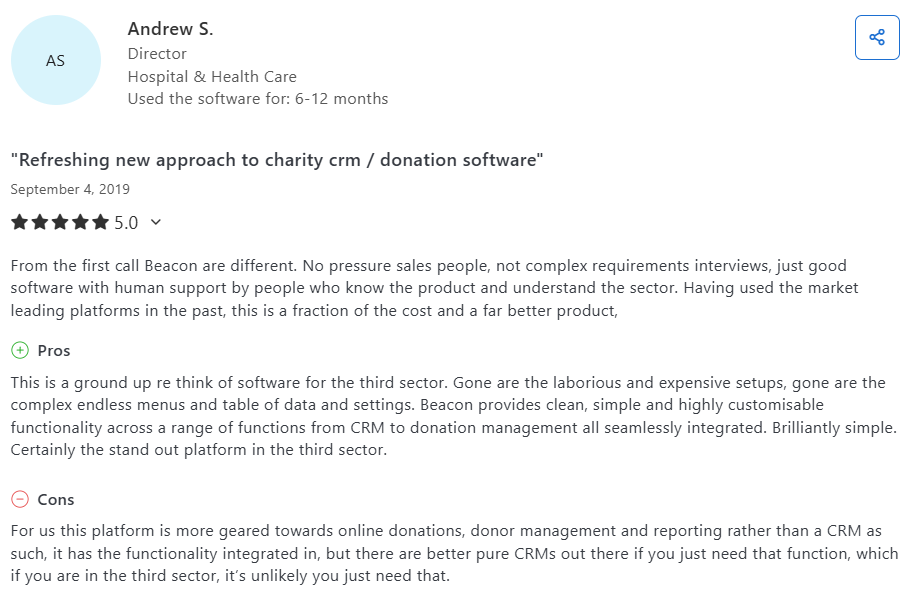
“This reviewer rates Beacon CRM 4.5/5, describing it as an excellent tool for small NGOs and charities to manage donor and donation data efficiently. They appreciate how easy it is to retrieve past donor information and praise the responsive support team for quick issue resolution.

On the downside, they note that being fully cloud-based means it doesn’t work offline, and the software has a steep initial learning curve. They also mention it’s slightly more expensive than some competitors. Despite this, the reviewer says Beacon greatly streamlines event planning and donor management, saving time for smaller non-profits.”

Review Link: https://www.g2.com/products/beacon-beacon/reviews/beacon-review-11353255

Final Thoughts: Which Charity CRM Is Right for You?

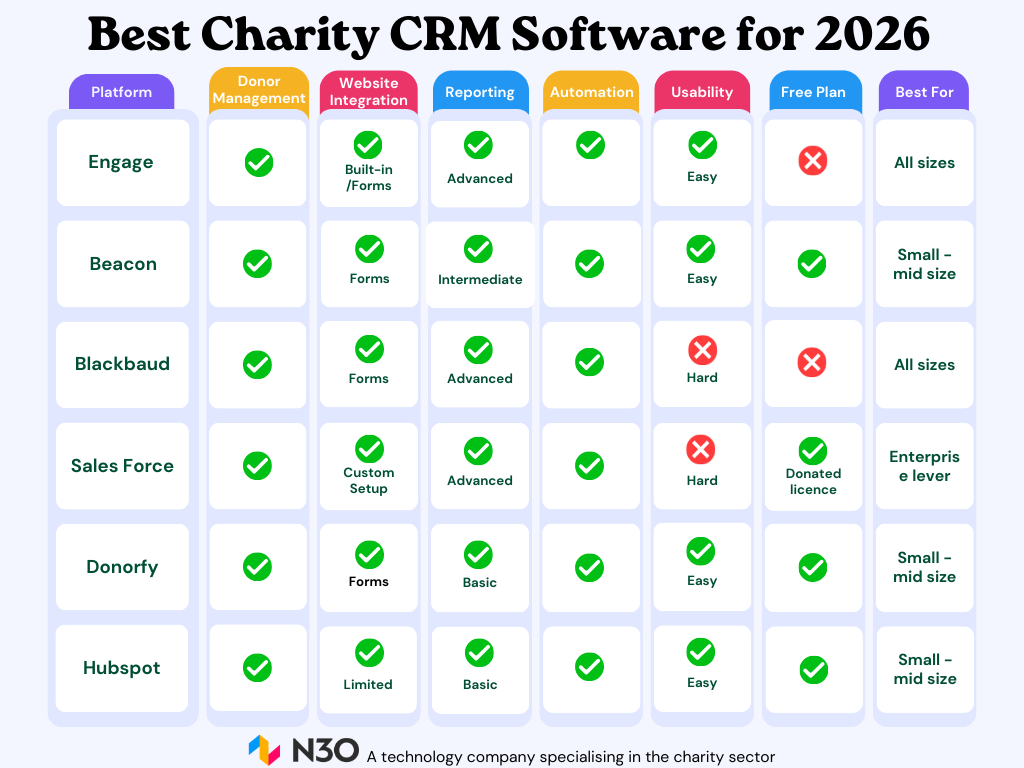
  • For full ecosystem control & website integration → Engage CRM
  • For enterprise-grade customisation & scale → Salesforce Nonprofit Cloud
  • For traditional fundraising teams with complex gift pipelines → Blackbaud Raiser’s Edge NXT
  • For marketing-driven engagement & automation → HubSpot for Nonprofits
  • For budget-friendly, straightforward donor management → Donorfy
  • For modern, lightweight CRM needs → Beacon CRM
About the author
Aqsa Deen
Content Marketer

Aqsa Deen is a skilled content marketer and writer at N3O, specialising in research-backed long-form content that helps charities amplify their impact through engaging narratives. When not crafting content, Aqsa indulges in the art of Islamic calligraphy and Illumination, blending creativity and tradition in every stroke.

Continue your reading with these value-packed posts

See what Engage can do for your team.

Get in touch for a demo focused on your charity's needs.

Friendly stuff
Tailored advice
Free support